Border Terrier
A hardy, good-natured terrier from the Anglo-Scottish border country. The Border Terrier is one of the most adaptable and companionable of all the terrier breeds, making it a superb family dog.
Personality Traits
History and Origins
The Border Terrier takes its name from the Anglo-Scottish border country, the wild, hilly landscape of Northumberland, Roxburghshire, and the Cheviot Hills where it was developed. This is a breed shaped by harsh terrain and practical necessity. Border farmers and shepherds needed a terrier tough enough to follow the local Foxhound packs on long hunts across open fell country, yet small enough to go to ground after foxes that were preying on livestock.
Unlike some terrier breeds that were refined for the show ring, the Border Terrier remained a working dog for much of its history. Its appearance was secondary to its ability to do the job, covering miles of rough ground, swimming rivers, and bolting foxes from rocky dens. The Kennel Club recognised the breed in 1920, and the Border Terrier Club was founded the same year. Since then, the breed has steadily grown in popularity, becoming one of the UK's most popular terriers and consistently ranking among the top registered breeds with the Kennel Club.
Appearance
The Border Terrier has a workmanlike appearance that reflects its practical heritage. Standing around 30 to 33 cm at the shoulder and weighing between 5 and 7 kg, the Border is a compact, moderately built dog. The breed standard describes the head as being "like that of an otter," broad across the skull with a short, strong muzzle. This distinctive otter-shaped head is one of the breed's hallmarks.
The double coat is dense and wiry, with a close, soft undercoat and a harsh outer coat that is weather-resistant and designed to withstand the cold, wet conditions of the border hills. Coat colours include red, wheaten, grizzle and tan, or blue and tan. The body is narrow enough to allow the dog to follow a fox underground, and the legs are long enough to keep up with horses over open country. The overall look is natural, unfussy, and thoroughly functional.
Is a Border Terrier Right for You?
Border Terriers are among the most amenable of the terrier breeds. They are less fiery than Jack Russells, less stubborn than Westies, and more adaptable than many of their terrier cousins. This makes them an excellent choice for first-time dog owners who are drawn to the terrier type but want a dog that is a little easier to manage.
They are sociable dogs that get along well with people of all ages and usually coexist peacefully with other dogs, though their prey drive means they should not be trusted around small pets like hamsters or rabbits. They need a moderate amount of exercise and mental stimulation, and they are happy in both town and country settings.
- Excellent choice for first-time terrier owners
- Good with children and other dogs when properly socialised
- Adaptable to both active and more relaxed lifestyles
- Coat needs hand-stripping but is otherwise low-maintenance
Living with a Border Terrier
Border Terriers are easygoing, good-natured dogs that fit comfortably into family life. They are affectionate without being demanding, playful without being hyperactive, and independent without being aloof. They enjoy being part of the household and will happily tag along on family outings, settle down for a quiet evening, or accompany you on a long walk across the countryside.
Their moderate energy levels make them well suited to a range of owners, from active walkers to those who prefer a more relaxed pace. They are particularly popular with older owners looking for a manageable, companionable dog that still enjoys a good walk. In rural areas, they are in their element, but they also adapt well to suburban and urban living.
One behaviour that can catch owners by surprise is the Border's love of digging. These are dogs bred to go underground, and the instinct to excavate remains strong. A secure, well-fenced garden is essential, as Borders can be determined escape artists, using a combination of digging and climbing to find their way out. They are also skilled at finding and enlarging gaps in fencing, so regular boundary checks are advisable.
Training Tips
Border Terriers are among the most trainable of the terrier breeds. They are intelligent, food-motivated, and generally willing to please, which makes them responsive to positive reinforcement training. They enjoy the mental challenge of learning new things and can do well in obedience, agility, and scent work.
That said, they are still terriers, and they still have an independent streak. Recall can be unreliable when the Border picks up an interesting scent, and they may choose to ignore commands if something more exciting presents itself. Consistent training, started early and continued throughout their lives, produces the best results.
- Use food rewards generously, as Borders are highly motivated by treats
- Practice recall in enclosed areas before progressing to open spaces
- Socialise with a wide variety of dogs, people, and environments from puppyhood
- Provide mental enrichment through puzzle feeders, scent games, and trick training
Temperament
The Border Terrier possesses one of the best temperaments in the terrier group. They are friendly, cheerful, and remarkably adaptable dogs that seem to get along with just about everyone. Where some terrier breeds can be intense, reactive, or dominant, the Border tends to be easygoing and sociable, making it a popular choice for families and first-time terrier owners.
They are affectionate dogs that enjoy physical closeness with their owners. Many Borders love to sit on laps, burrow under duvets, and lean against their favourite person. They bond strongly with the whole family rather than fixating on one individual, and they are typically welcoming to visitors and strangers alike.
Despite their gentle nature, Borders retain genuine terrier instincts. They have a keen prey drive and will chase rabbits, squirrels, and cats if given the opportunity. They are also energetic and love to play, retaining a puppy-like enthusiasm well into middle age. Their intelligence means they enjoy problem-solving, and they can be surprisingly crafty when it comes to getting what they want, whether that is a treat from the counter or an escape route from the garden.
With other dogs, Borders are generally sociable and playful. They tend to be less dog-aggressive than some terrier breeds, though, like all dogs, their behaviour depends on socialisation and individual temperament. They are confident without being confrontational and rarely start trouble, though they will stand their ground if challenged.
Exercise Needs
Border Terriers need around 45 to 60 minutes of exercise daily. They are active, energetic dogs that enjoy a good walk, but they are not as relentlessly demanding as some terrier breeds. Two moderate walks a day, with opportunities for off-lead running in secure areas, will keep most Borders happy and healthy.
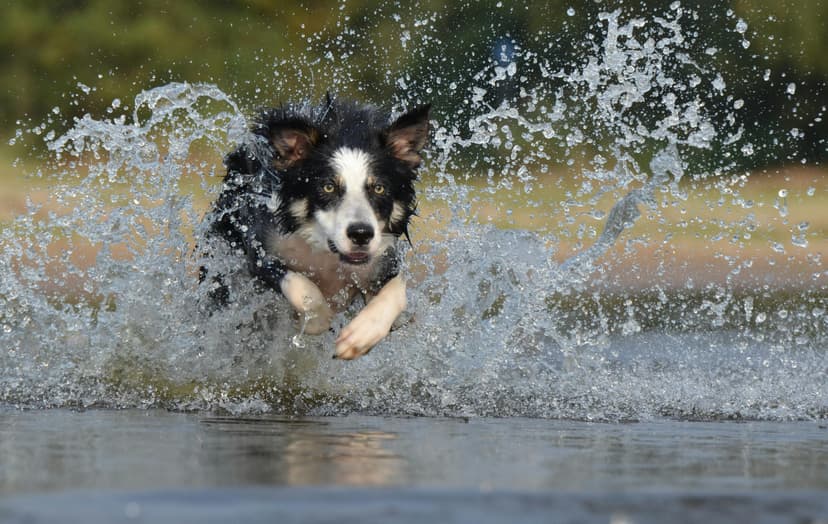
They were bred to cover long distances over rough terrain, so they have good stamina and cope well with hills, woodland paths, and uneven ground. Many Border owners enjoy long weekend walks in the countryside, and the breed is well suited to this type of activity. They also enjoy swimming and will happily wade into streams and ponds.
Mental stimulation is important for this intelligent breed. Scent work, puzzle toys, and training games are all excellent ways to keep a Border's mind active. They take well to dog sports, particularly agility and earthdog trials, which tap into their natural instincts. A Border that receives both physical and mental exercise is a contented, well-behaved companion.
Grooming
The Border Terrier's wiry double coat is relatively low-maintenance between professional grooming sessions. A weekly brush to remove loose hair and prevent tangles is usually sufficient for day-to-day care. The coat is naturally weather-resistant and does not pick up as much dirt as you might expect, which is a practical advantage for a dog that loves rolling in the mud.
Hand-stripping is the recommended grooming method for Border Terriers, and it should be done two to three times a year. This involves pulling out the dead outer coat by hand, which encourages new, harsh coat growth and maintains the correct texture. Many owners learn to hand-strip at home, while others rely on a professional groomer who is experienced with terrier coats. Clipping is an alternative but will soften the coat texture over time.
Regular nail trimming, ear cleaning, and dental care complete the grooming routine. Border Terriers are not heavy shedders, but they do lose coat between hand-stripping sessions. A good rubber grooming mitt can help manage loose hair. Overall, grooming a Border Terrier is a manageable commitment, far less demanding than many other terrier breeds.
Health
Border Terriers are generally healthy dogs with a good lifespan of 12 to 15 years. However, like all breeds, they are susceptible to certain health conditions. One of the most significant is Canine Epileptoid Cramping Syndrome (CECS), sometimes called Spike's Disease, a movement disorder that causes episodes of cramping, trembling, and difficulty walking. The condition is specific to Border Terriers and is still being researched.
Hip dysplasia can occur in the breed, though it is less common than in larger dogs. Patellar luxation and heart murmurs are occasionally seen. Progressive retinal atrophy (PRA), a degenerative eye condition that leads to blindness, has been identified in the breed, and a DNA test is available. Responsible breeders screen for PRA before breeding.
Border Terriers can be prone to allergies, which may manifest as skin irritation or digestive issues. Maintaining a healthy weight is important, as Borders are enthusiastic eaters and can easily become overweight if portions are not controlled. Regular veterinary check-ups, a balanced diet, and appropriate exercise will help ensure your Border Terrier leads a long, healthy life.
For official breed standards, visit The Kennel Club.
Frequently Asked Questions
Are Border Terriers good first dogs?
Yes, Border Terriers are often recommended as an excellent choice for first-time dog owners. They are friendly, trainable, and moderate in their needs. Their good temperament and adaptability make the transition to dog ownership smoother than with more demanding breeds.
Do Border Terriers shed a lot?
Border Terriers are light to moderate shedders. Their wiry coat benefits from regular hand-stripping, which removes dead hair and reduces shedding. Between grooming sessions, a weekly brush helps keep loose hair under control.
Can Border Terriers be left alone during the day?
Border Terriers are sociable dogs that prefer company. They can manage short periods alone if properly trained, but should not be left for more than four to five hours regularly. Providing toys and enrichment can help keep them occupied during absences.
Are Border Terriers good with cats?
Border Terriers have a strong prey drive and many will chase cats. Some can learn to live with a household cat if raised together from puppyhood, but introductions should be carefully managed. They should never be trusted unsupervised with small pets like rabbits or hamsters.
How much exercise does a Border Terrier need?
Border Terriers need around 45 to 60 minutes of exercise daily, ideally split into two walks with some off-lead time. They enjoy exploring and have good stamina for their size. Mental stimulation through games and training is equally important.
What is hand-stripping and does my Border Terrier need it?
Hand-stripping is the process of pulling out dead outer coat by hand to promote new growth and maintain the correct wiry texture. It should be done two to three times a year. Clipping is an alternative but softens the coat over time. Many groomers and breed clubs can teach you the technique.
Enjoying this guide?
Get more like it every week. The best walks, pub picks and breed tips, straight to your inbox.